
How to Buy a Home with a VA Loan: Benefits and Requirements
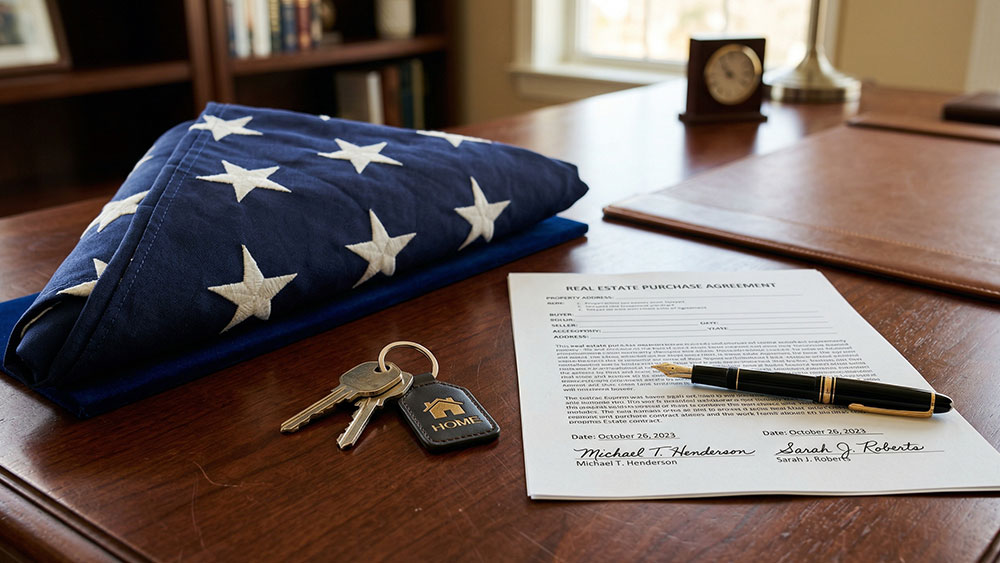
The Department of Veterans Affairs (VA) loan program is arguably the most powerful home-financing tool in the residential real estate market. Established to help returning service members plant roots, it offers financial advantages that conventional and FHA loans cannot match. Navigating this process successfully requires understanding specific military eligibility criteria and the unique property standards enforced by the government.
The Unmatched Benefits of a VA Mortgage
Conventional mortgages demand significant cash reserves, and FHA loans carry permanent, expensive insurance premiums that eat into a buyer’s monthly budget. The VA loan was structurally designed to remove these massive financial barriers for military families transitioning into civilian life. By guaranteeing a portion of the loan, the federal government empowers private lenders to offer incredibly favorable terms to qualified veterans.
Zero Down Payment and No PMI
The most famous advantage of the VA loan is the absolute lack of a down payment requirement. Borrowers can finance 100% of the home’s purchase price without depleting their savings. Furthermore, the VA does not require monthly Private Mortgage Insurance (PMI), saving homeowners hundreds of dollars each month.
Competitive Interest Rates and Lenient Credit
Because the government backs these loans, lenders assume far less risk when issuing the mortgage funds. This reduced risk translates directly into lower interest rates compared to standard conventional mortgages. Additionally, lenders are typically more forgiving of lower credit scores or past financial blemishes when underwriting a VA application.
Eligibility and the Certificate of Eligibility (COE)
Not everyone who served in the military automatically qualifies for this exclusive home loan benefit. The Department of Veterans Affairs has strict, duration-based criteria that determine who qualifies for the program. Proving this eligibility to a private lender is the mandatory first step in the VA homebuying process.
Minimum Service Requirements
Active-duty service members generally qualify after 90 continuous days of service during wartime or peacetime. National Guard and Reserve members generally become eligible after six creditable years of honorable service. Certain mobilization orders or service-connected discharge statuses can expedite this timeline for affected personnel.
How to Obtain Your COE
The Certificate of Eligibility (COE) is the official government document proving you meet the minimum service requirements. Most mortgage lenders can pull this document electronically in minutes through the VA’s automated system. Alternatively, veterans can request it directly through the government’s eBenefits portal by uploading their discharge paperwork.
Understanding the VA Funding Fee
While the VA loan lacks monthly mortgage insurance, it is not entirely free of government-mandated costs. To keep the program running for future generations without a taxpayer burden, the VA assesses a one-time charge on most transactions. This specific cost is known as the VA Funding Fee and varies based on your loan details.
Fee Structure and Exemptions
The exact percentage of the funding fee depends on your down payment size and whether this is your first time using the benefit. For a first-time user putting down zero money, the fee is generally slightly over 2% of the total loan amount. However, veterans receiving VA compensation for a service-connected disability are completely exempt from paying this fee.
Financing the Fee vs. Paying Upfront
Borrowers do not have to pay this substantial fee out of pocket at the closing table. The VA allows buyers to roll the entire funding fee directly into the total loan balance. While this increases the monthly payment slightly, it preserves the borrower’s liquid cash for moving expenses and home furnishings.
Property Requirements and the VA Appraisal
The VA wants to ensure that veterans are purchasing safe, structurally sound, and sanitary homes. Therefore, they deploy a specialized appraisal process that differs significantly from a conventional property valuation. The appraiser must act as both a value estimator and a strict government safety inspector.
Minimum Property Requirements (MPRs)
The home must meet the VA’s Minimum Property Requirements (MPRs). Appraisers will aggressively flag safety issues like peeling lead-based paint, exposed wiring, missing handrails, or failing roofs. If the property fails to meet these standards, the seller or buyer must fix the issues before the loan can close.
The Escape Clause Protection
VA buyers are uniquely protected by the mandatory VA Escape Clause, which is signed during the contract phase. If the home appraises for less than the agreed-upon purchase price, the buyer can walk away without any penalty. They are legally entitled to a full refund of their earnest money deposit, regardless of what the original purchase contract stated.
Closing Points
Earning the right to use a VA loan is a profound benefit born from military service and sacrifice. By offering zero-down financing and eliminating mortgage insurance, it provides an unparalleled path to wealth creation through real estate. Veterans who understand the COE, the funding fee, and the strict property requirements can secure their piece of the American dream at an exceptional economic cost.