
The Buyer’s Walk-through: What Sellers Need to Have Ready
The final walk-through is the last major hurdle before a real estate transaction officially closes. It typically occurs twenty-four to forty-eight hours before the scheduled closing appointment. For sellers, this can feel nerve-wracking, since a failed walk-through can delay closing or derail the sale entirely.
Buyers use this time to ensure the property is in the agreed-upon condition and that no new damage has occurred. They are not conducting a new home inspection, but rather verifying that the home is ready for immediate transfer. Sellers must prepare the home meticulously to ensure this process goes smoothly and leaves the buyer feeling confident.
The Purpose of the Final Walk-through
Sellers often misunderstand the true objective of the final walk-through, mistaking it for a casual courtesy visit. This event is a formal contractual right that lets the buyer verify the property’s physical and mechanical condition. Understanding this distinction helps sellers prioritize the right tasks and avoid eleventh-hour friction.
Verifying the Property Condition
Buyers expect to find the home in substantially the same condition it was in when they signed the purchase agreement. This means moving out should not leave huge gouges in the hardwood floors or newly broken windows. If accidental damage does occur during the move, the seller must proactively disclose it and offer a financial concession.
Confirming Agreed-Upon Repairs
If the original contract included seller concessions for specific repairs, the buyer will closely verify that the work is completed. Sellers must leave all receipts and contractor invoices neatly organized on the kitchen counter as proof of the professional labor. Failing to complete negotiated repairs is the most common reason a closing is delayed or a deal collapses entirely.
Essential Utility and System Checks
You can’t properly evaluate a house if the outgoing owner has already disconnected essential services. Sellers must coordinate with their utility providers to keep water, electricity, and gas active through closing. Shutting off the power prematurely prevents the buyer from testing the lights, HVAC systems, and kitchen appliances.
Keeping the Power and Water Flowing
Buyers will turn on faucets, flush toilets, and test light switches during their final walk-through. If the water is shut off at the main valve, they cannot verify that the plumbing is completely free of leaks. Leave all utilities active in your name until the very end of the day you officially sign the closing documents.
HVAC and Appliance Functionality
The buyer will absolutely test the heating and air conditioning systems to ensure they still function correctly. They will also run the dishwasher through a short cycle and check that the refrigerator remains properly cold. Make sure these systems run smoothly, and leave them set to comfortable, standard temperatures for the walk-through.
Leaving the Home Broom Clean
Real estate contracts almost universally require the seller to leave the property broom clean upon vacating. This legal term does not require a flawless, professional deep clean, but it does require removing all personal debris. The home should be swept, vacuumed, and empty of anything not explicitly included in the sale contract.
Clearing Out Personal Property
Sellers often mistakenly leave behind items they assume the new buyer might want, like old paint cans. Unless the buyer specifically agreed in writing to keep these items, sellers must remove them completely. An abandoned couch in the basement or leftover yard waste can immediately trigger an ugly dispute at the closing table.
Addressing Hidden Debris and Trash
Once you remove heavy furniture, you will likely find dust bunnies, hidden trash, or small concealed spills. Take the time to wipe down the inside of empty cabinets and quickly sweep out the entire garage floor. A visually clean home signals to the buyer that you have respected the property and taken the transaction seriously.
Organizing Essential Documents and Items
The final walk-through is the perfect time to hand over the property’s operational keys and codes. Gathering all necessary household items into one highly visible location prevents the buyer from panicking about locked doors. This small act of organization leaves a strong final impression and sets a positive tone for the closing appointment.
Keys, Remotes, and Access Codes
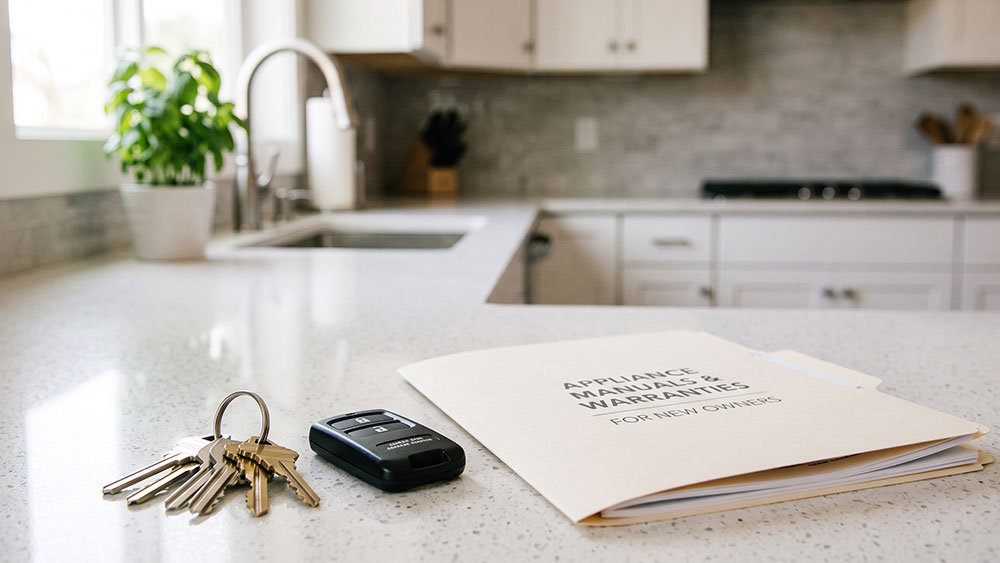
Place every house key, including spares, on the kitchen counter so the buyer can easily inventory them. You must also leave behind all necessary access devices to ensure a smooth transition of legal ownership. Write down any security alarm codes, smart thermostat logins, and digital lock combinations on a clear piece of paper.
Warranties and Manuals
Modern homes are filled with complex appliances and mechanical systems that require specific, routine maintenance schedules. Gather the instruction manuals for the HVAC system, kitchen appliances, and sprinkler systems into a single binder or folder. Include any transferable warranty documents or recent service records to give the new owners immediate peace of mind.
Navigating Last-Minute Hiccups
Even with careful preparation, unexpected physical issues can surface during the buyer’s final property walk-through. A pipe might suddenly leak the morning of the visit, or the moving company might accidentally damage a doorframe. Sellers must remain incredibly calm, communicate transparently through their real estate agent, and be prepared to offer reasonable solutions.
Escrow Holdbacks for Unfinished Repairs
If a mandated repair can’t be completed in time because of contractor delays, you can negotiate an escrow holdback. This means the title company holds a portion of your sale proceeds until the repair is fully completed. It lets closing proceed on schedule while guaranteeing the buyer the work will ultimately be funded.
Delays in Moving Out
If your hired movers are severely delayed, notify the buyer’s agent immediately before they arrive. Don’t force the buyers to navigate a chaotic maze of cardboard boxes and highly stressed movers. Ask for a brief extension of the walk-through timeline, and consider offering a small financial concession for the severe inconvenience.
Managing the Landscape and Exterior
The interior of the home often receives all the attention during move-out preparations, but the exterior is equally important. Buyers will walk the perimeter of the property to ensure the yard, fencing, and exterior fixtures remain perfectly intact. Neglecting the outside of the home can quickly derail a walk-through just as easily as an indoor plumbing leak.
Yard Maintenance and Debris
Do not let the grass grow out of control or allow the flower beds to fill with aggressive weeds. The lawn should be freshly mowed, and you must haul away any yard waste and broken patio furniture. A tidy exterior reassures the buyer that the property has not been totally abandoned during the final escrow stages.
Securing Exterior Structures
Ensure that all outdoor storage sheds, detached garages, and pool houses are completely emptied out and swept clean. Leave the keys or padlocks for these specific structures clearly labeled on the kitchen counter alongside the main keys. The buyer must verify that these auxiliary buildings are fully accessible and free of leftover hazardous materials.
The Etiquette of the Final Walk-through
The final walk-through is meant to be an objective evaluation by the buyer, not a social visit with the owner. Real estate professionals strongly advise sellers to completely vacate the premises before the buyer arrives for their appointment. Lingering in the home creates an incredibly awkward atmosphere and prevents the buyer from inspecting the property freely.
Giving the Buyer Privacy
Buyers need the space to speak openly with their agent about any serious concerns they discover during the tour. If the seller is standing in the hallway, the buyer may feel too intimidated to test appliances or ask hard questions. Leave the house a full hour before the scheduled appointment to avoid crossing paths with the buyers.
Relying on Agent Communication
If the buyer finds an issue, their agent will immediately contact your listing agent to discuss a fast resolution. Never try to negotiate directly with the buyer over a broken fixture or a missed cleaning spot. Rely entirely on the professional buffer of your real estate agents to handle any sudden disputes quickly and emotionlessly.
Closing Points
The buyer’s walk-through should be a seamless victory lap, not a frantic, last-minute real estate crisis. By prioritizing repairs, leaving the utilities active, and ensuring the home is empty, you easily eliminate common roadblocks. A successful walk-through clears the final path to the closing table, allowing you to hand over the keys permanently.