
Navigating Real Estate Disclosures: What You Legally Must Reveal
Selling a home is an incredibly complex financial transaction fraught with potential legal landmines. Sellers must legally disclose known issues with their property long before the closing papers are signed. This formal declaration of facts is known as a real estate disclosure, and it protects you from devastating post-sale lawsuits.
The End of the “Buyer Beware” Era
Historically, real estate transactions operated under the strict legal doctrine of “caveat emptor,” which translates directly to “buyer beware.” This archaic rule placed the entire burden of discovering property defects squarely on the purchaser’s shoulders. Sellers could legally remain completely silent about massive structural flaws as long as they did not actively lie.
Modern real estate law has largely abandoned this harsh, unforgiving standard. Today, the legal burden has shifted dramatically toward the seller to provide full and absolute transparency. Courts now recognize that sellers possess an inherent informational advantage regarding the true, hidden condition of their own property.
This shift means you can no longer cross your fingers and hope the buyer’s inspector misses a leaky roof. In most jurisdictions, failing to disclose a known defect is treated as a severe form of financial fraud. Honesty is no longer just a moral obligation; it is a strict legal requirement under state and federal laws.
Federal Disclosure Mandates for All Sellers
While most real estate laws are dictated at the state level, the federal government enforces a few universal mandates. These national regulations apply to nearly every residential property transaction and supersede all local laws. Federal rules focus almost exclusively on severe environmental and health hazards that could physically harm the new occupants.
The Lead-Based Paint Hazard
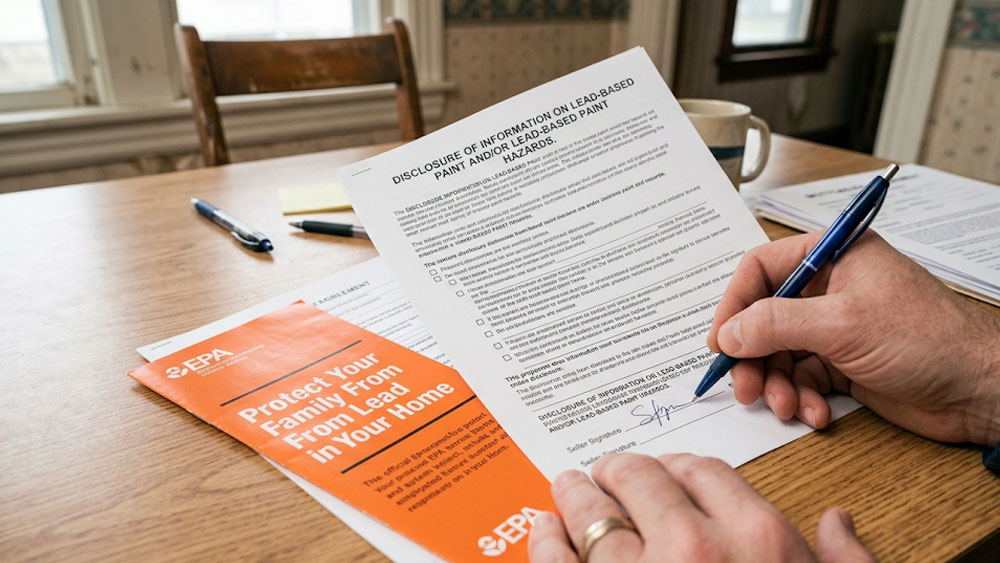
The single most famous federal disclosure rule involves the presence of toxic lead-based paint. If your home was constructed prior to 1978, you must provide buyers with a specific, federally mandated disclosure form. You are legally required to hand over any existing records regarding lead paint hazards on the property.
Sellers must also provide buyers with an official Environmental Protection Agency pamphlet detailing the severe dangers of lead exposure. Buyers are then granted a standard ten-day window to conduct their own independent lead paint inspection. You do not have to remove the paint, but you must disclose that you know it exists.
Asbestos and Environmental Hazards
Federal law is somewhat murky regarding the explicit requirement to disclose asbestos, but the general rule of transparency still applies. If you know for a fact that your older home contains asbestos insulation or flooring, you must reveal it. Concealing known carcinogens is a guaranteed path to a massive, financially ruinous personal injury lawsuit.
This federal emphasis on health hazards also extends to known underground storage tanks or severe soil contamination. If your property was previously used as a gas station or industrial site, you cannot hide that history. Buyers have an absolute federal right to know if their new backyard is a toxic environmental hazard.
Navigating State-Specific Disclosure Laws
Federal laws cover extreme health hazards, but state governments strictly regulate the massive volume of day-to-day property defects. Disclosure requirements vary widely depending on which state your property is in. While some states require ten-page questionnaires about every household system, others rely heavily on the buyer’s own independent inspections.
California and the Strict States
States like California have enacted some of the most rigorous and exhaustive real estate disclosure laws in the entire country. Sellers in these highly regulated markets must complete a Transfer Disclosure Statement that leaves absolutely no stone unturned. You must explicitly list known issues, from neighborhood noise levels to the exact condition of the microwave.
In these strict states, ignorance is rarely accepted as a valid legal defense in a courtroom. If a reasonable homeowner should have known about a massive foundation crack, a judge will likely hold you liable. Sellers in these jurisdictions must be hyper-vigilant and overly communicative to avoid expensive post-sale litigation.
Caveat Emptor Holdouts
A tiny handful of states still fiercely cling to modified versions of the old “buyer beware” doctrine. In places like Arkansas or Virginia, the seller’s legal obligation to disclose physical defects is surprisingly minimal. Sellers in these states generally only have to answer direct questions honestly rather than volunteering a massive list of flaws.
However, even in these lenient states, you can never actively conceal a known, dangerous defect. If you intentionally build a fake wall to hide massive termite damage, you have still committed active fraud. Even the most relaxed real estate markets will swiftly punish a seller for deliberate, malicious deception.
Disclosing Physical Property Defects
The most common source of post-sale litigation centers on hidden, incredibly expensive physical defects in the home. Buyers expect a house to function properly, and they will sue if a major system fails right after they move in. To avoid this, you must proactively disclose any known material facts that could significantly affect the property’s overall market value.
Foundation and Structural Issues
The foundation is the property’s literal bedrock, and major repairs can cost tens of thousands of dollars. If your basement frequently floods during heavy rainstorms, you must explicitly document this recurring issue for the buyer. Patching a severe foundation crack with cheap cosmetic concrete without disclosing the underlying failure is illegal.
Sellers must also reveal any known structural issues with the home’s primary load-bearing walls or aging roof. If the roof currently leaks, or if you know it needs immediate replacement, you must share that information. Buyers use these disclosures to calculate their upcoming repair budgets and formulate their initial purchase offers.
Water Damage and Toxic Mold
Water is a home’s ultimate enemy, capable of causing devastating structural rot and dangerous health hazards. You must disclose past plumbing leaks that caused severe drywall damage or hidden mold growth. Even if you believe you fully remediated the mold, the history of the moisture intrusion is highly relevant.
- Always disclose previous burst pipes or catastrophic appliance leaks.
- Reveal any known history of localized flooding or aggressive groundwater intrusion.
- Provide documentation of any professional mold remediation services you hired.
HVAC and Electrical Systems
Faulty wiring and aging climate control systems are massive financial liabilities that buyers absolutely must know about. If a circuit breaker constantly trips or a furnace requires manual restarting, you cannot hide these quirks. Upgrading an electrical panel or replacing a central air unit is astronomically expensive, and buyers need that information upfront.
Pests and Termite Damage
Wood-destroying insects can completely hollow out a home’s structural supports without leaving obvious exterior signs. If your property has a documented history of severe termite, carpenter ant, or powderpost beetle infestations, speak up. Even if the home was professionally treated five years ago, the buyer has a legal right to know that history.
Intangible Issues and Stigmatized Properties
Not all real estate defects are physical; some properties carry deep emotional or psychological scars known as stigmas. A stigmatized property is a home where a disturbing event occurred, making it highly undesirable to the general public. Sellers often struggle to determine whether a rumor or past tragedy legally requires disclosure, since laws vary widely.
Deaths on the Property
The rules regarding deaths in a home are highly specific to your local state legislation. Some states require you to disclose any violent murders or highly publicized suicides that occurred on the property. Other states explicitly protect sellers, stating that a peaceful death from natural causes is never a material defect.
If a buyer looks you directly in the eye and asks if someone died there, you must answer truthfully. Lying to a direct question about a property’s morbid history is almost always considered an act of fraud. When in doubt, consulting a licensed local real estate attorney is the safest possible course of action.
Nuisances and Neighborhood Disputes
Your legal obligation to disclose extends slightly beyond your own physical property lines in certain specific situations. If you are currently engaged in a vicious, ongoing legal boundary dispute with your neighbor, the buyer must know. You cannot secretly pass a toxic, litigious neighborhood rivalry onto an unsuspecting new homeowner.
Some states also require disclosures regarding severe, persistent neighborhood nuisances that disrupt quiet enjoyment. This might include a nearby industrial facility that emits toxic odors or a local dog kennel that barks continuously. If an external factor severely impacts your daily ability to enjoy the property, it is likely a required disclosure.
The Severe Consequences of Failing to Disclose
The temptation to hide a massive flaw to secure a higher purchase price is a dangerous and foolish gamble. The financial and legal consequences of getting caught concealing a known defect are absolutely devastating to a seller. Buyers have years to discover these hidden issues, and they are rarely hesitant to involve aggressive trial attorneys.
If a buyer discovers fraud after closing, they can sue you for the entire cost of the required repairs. In severe cases, a judge can completely rescind the sale, forcing you to buy the defective house back immediately. You may also be held liable for the buyer’s expensive attorney fees and additional punitive financial damages.
Furthermore, real estate agents can face severe penalties or lose their professional licenses if they participate in the cover-up. A quality agent will always advise you to over-disclose rather than risk a devastating lawsuit. Honesty remains your strongest legal shield against any future claims of deception or fraud.
Closing Points
Navigating the complex maze of real estate disclosures can feel incredibly overwhelming for a first-time home seller. However, the fundamental guiding principle is shockingly simple: absolute honesty is always the best possible policy. Your goal is to provide the buyer with a clear, accurate snapshot of the home’s true condition.
When you proactively disclose known defects, you eliminate the buyer’s ability to sue you later. They are purchasing the property fully aware of its flaws, shifting the financial risk entirely onto their shoulders. By treating the disclosure process with respect and transparency, you ensure a clean, legally sound transition to your next home.
Disclaimer: The information provided in this article is for educational and informational purposes only and does not constitute legal, financial, or professional real estate advice. Real estate disclosure laws vary significantly by state and local jurisdiction. Always consult with a licensed real estate attorney and a qualified real estate professional regarding your specific situation before making any legal or financial decisions.